


Aerogel+ Products All You Need for Thermal Insulation

Aerogel Insulation Material | China | Top Leading| China | Top Leading
Share
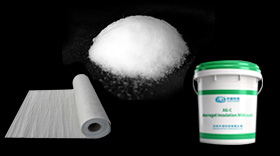
In core industries such as industrial insulation, fireproof coatings, new energy, pipeline energy saving, and building thermal insulation, aerogel has become a next-generation mainstream insulation material due to its ultra-low thermal conductivity, lightweight structure, and excellent thermal performance.
Today, more engineers and procurement professionals are choosing aerogel powder or aerogel slurry as functional raw materials for production and construction. However, during material selection, many users face the same confusion:
They are unsure whether to choose aerogel powder or aerogel slurry, cannot clearly match parameters to applications, and worry that a wrong choice may increase costs or reduce insulation performance.
To help users avoid common selection mistakes and make more accurate decisions, this FAQ-style guide explains the key differences in a clear and practical way.
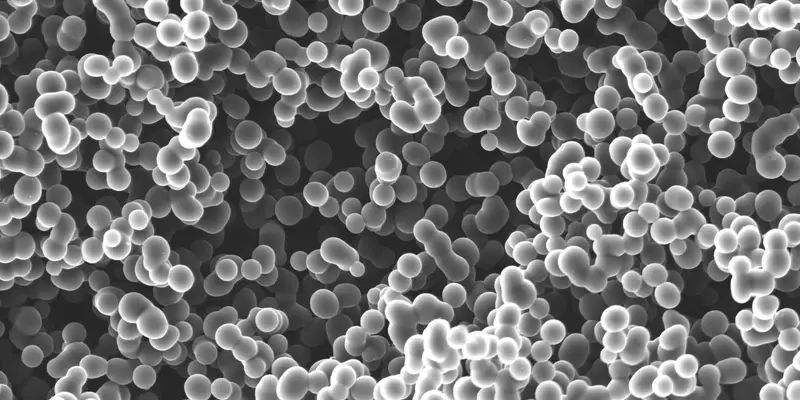
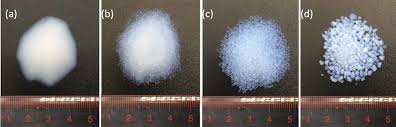
Aerogel powder is a nano-porous particulate material based on silica and represents one of the most fundamental raw material forms used in industrial aerogel applications.
Its core characteristics include:
Extremely low thermal conductivity
Ultra-lightweight structure
High porosity
Excellent fire resistance
Hydrophobic properties after modification
Because of these properties, aerogel powder is widely used as a thermal insulation functional filler in industrial production. Although the material itself is fragile, it can be combined with other substrates to enhance strength and mechanical performance while maintaining its insulation advantages.
Typical applications include:
Coating additives
Insulation board filling
Composite insulation materials
Industrial thermal insulation products
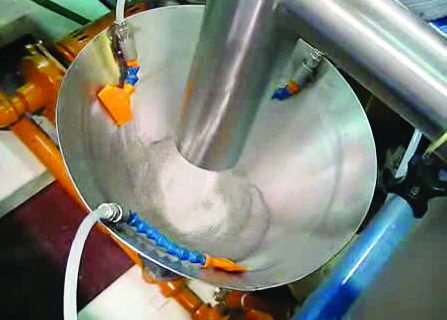
Modified silica aerogel powder is strongly hydrophobic, which makes dispersion in water-based systems technically challenging. Poor dispersion will significantly reduce thermal insulation performance.
Aerogel slurry is a fluid material formed by uniformly dispersing aerogel powder into a water-based system through specialized dispersion technology.
Unlike raw aerogel powder, aerogel slurry can be directly used without requiring the customer to perform complex dispersion processes. This greatly improves production efficiency and consistency.
Aerogel slurry is especially suitable for:
Water-based coating systems
Glass fiber materials
Water-based composite systems
Direct integration into insulation-enhanced materials
For manufacturers lacking advanced dispersion equipment or formulation experience, using aerogel slurry can effectively reduce processing difficulty and performance risks.
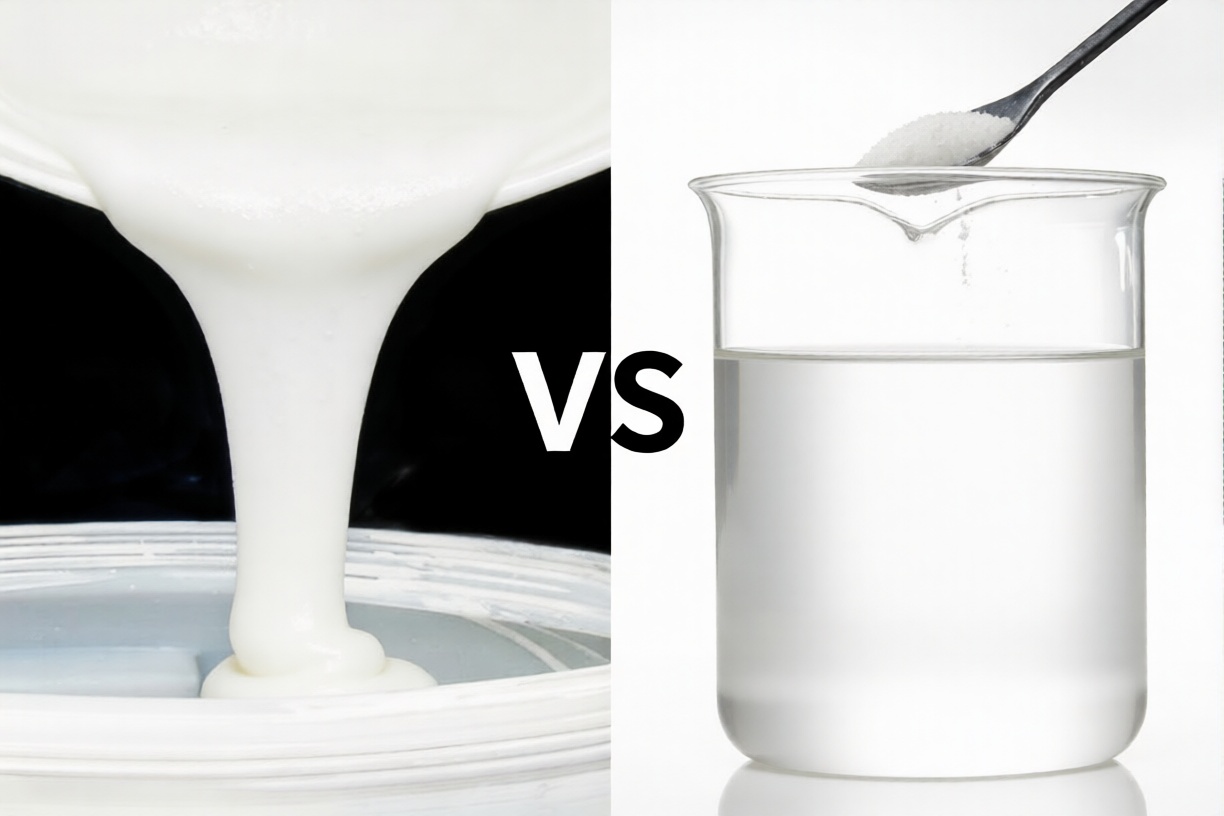
The key point to understand is that both aerogel powder and aerogel slurry are raw materials. The difference lies mainly in form, processing method, and application convenience.
There are four main differences:
① Form:
Aerogel powder is a dry particulate material, while aerogel slurry is a fluid dispersion system.
② Usage Method:
Aerogel powder must be mixed and dispersed with other materials; aerogel slurry can be directly added into substrates, water-based coatings, or composite systems.
③ Processing Difficulty:
Aerogel powder requires proper ratio control and dispersion technology; aerogel slurry is easier to handle and more production-friendly.
④ Application Scenarios:
Aerogel powder is more suitable for manufacturers with in-house R&D and formulation capability; aerogel slurry is ideal for direct production and on-site application.
Selection should be based on the actual application requirements.
Smaller particle size:
Suitable for thin coatings and high-performance coating systems
Provides smoother surface finish and better uniformity
Larger particle size:
More suitable for filling applications and thick insulation layers
Regarding density, lower density generally provides better insulation performance, but it also comes with higher cost and stricter processing requirements. Therefore, selection should balance insulation targets, process capability, and budget.
Aerogel is an inorganic material that does not contain formaldehyde or VOCs and is considered environmentally friendly under normal industrial usage conditions.
During production and application, it does not release harmful gases. When used as a filler in coatings or composite systems, the material remains chemically stable.
However, when handling aerogel powder in dry form, standard industrial safety measures such as dust protection and ventilation are recommended to ensure safe operation.
Under normal industrial environments, aerogel-based materials can typically achieve a service life of 10–20 years or longer, depending on system design and application conditions.
Aerogel materials offer:
Strong aging resistance
High thermal stability
Resistance to high and low temperature cycles
Long-term insulation performance retention
Compared with traditional insulation materials such as mineral wool and glass wool, aerogel offers several key advantages:
Thinner insulation thickness (often 1/2 to 1/5 for the same performance)
Lower structural load due to lightweight nature
Lower thermal conductivity
Superior fire resistance (inorganic and non-combustible)
Longer service life and better durability
These advantages make aerogel especially valuable in space-limited and high-performance insulation applications.
It is important to clearly understand that both aerogel powder and aerogel slurry are raw materials designed to enhance thermal insulation performance. The core difference is not the aerogel itself, but the material form and processing method.
Aerogel powder provides higher formulation flexibility and is better suited for manufacturers with technical development capability.
Aerogel slurry, on the other hand, is pre-dispersed and ready to use, making it more suitable for stable production and direct industrial integration.
Choosing the correct form at the early stage of material selection can significantly reduce development risks, control costs, and ensure consistent insulation performance in long-term industrial applications.
Global Leader in Aerogel Materials & Advanced Composite Solutions
Back to Top
Copyright © 2025 Shenzhen Aerogel Technology Co., Ltd&Zhongning Technology(Hubei) Co.,Ltd
Power By Bontop
 English
 Korean