


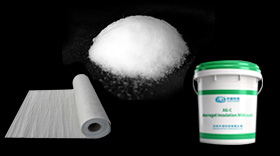
Aerogel+ Products All You Need for Thermal Insulation

Aerogel Insulation Material | China | Top Leading| China | Top Leading
Share
In 2024, the European Union adopted the revised Energy Performance of Buildings Directive (EPBD, EU/2024/1275).
The message is clear:
Europe’s buildings must consume less energy, emit less carbon, and undergo deeper renovation.
Since buildings account for around 40% of EU energy consumption and 36% of energy-related greenhouse gas emissions, insulation performance has become a structural issue — not just a construction detail.
As renovation pressure increases, the market is moving toward one central question:
How can buildings achieve higher thermal performance within limited space and structural constraints?
This is where aerogel insulation is gaining attention.

What the EPBD Means for Insulation Material
The revised EPBD introduces:
Near-zero energy standards for new buildings
Mandatory energy performance improvements for existing buildings
Stronger emphasis on deep renovation
Growing focus on lifecycle carbon assessment
In practice, this shifts the insulation market from minimum compliance to high-performance solutions.
Traditional insulation materials such as mineral wool or EPS can meet standard requirements — but as targets become stricter, their thickness becomes a limitation, especially in:
Historic buildings
Urban residential renovation
Interior retrofits
Projects with façade restrictions
Europe is not simply asking for “more insulation.”
It is asking for better performance per millimeter.
Why Aerogel Insulation Fits the New European Demand
Aerogel is a nano-porous material with extremely low thermal conductivity (as low as 0.013–0.020 W/m·K in blanket form).
Its value in the European context lies in three areas:
Ultra-thin thermal performance
Adaptability to renovation projects
Compatibility with higher energy standards
However, different aerogel products play different roles.
Understanding this distinction is essential.
Aerogel Coating: Thin-Layer Thermal Barrier for Moisture Control and Heat Reflection
Aerogel thermal insulation coatings are typically applied at 1–3 mm thickness. A 2 mm aerogel coating may have a thermal conductivity around 0.04 W/m·K.
It is important to clarify:
Aerogel coating does not replace thick insulation layers for thermal resistance (R-value).
Thermal insulation still fundamentally depends on thickness.
Instead, aerogel coating provides:
Surface-level thermal resistance
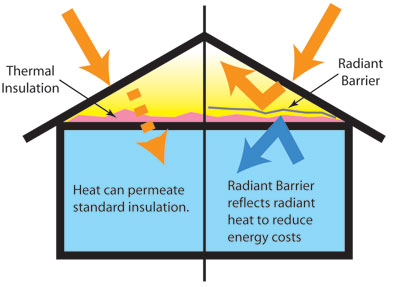
Reduction of radiant heat transfer
Heat reflection and solar heat blocking
Moisture resistance
Anti-condensation protection
Mold prevention
This makes aerogel coating particularly suitable for:
Interior wall renovation
Cold bridge treatment
Ceiling and attic retrofits
Humid climates in Southern Europe
Industrial buildings with condensation issues
Under EPBD-driven renovation, preventing thermal bridges and moisture-related energy loss becomes increasingly important.
Aerogel coating acts as a complementary high-performance layer in multi-system insulation design.
Aerogel Blanket: High-Performance Insulation for Space-Limited Renovation
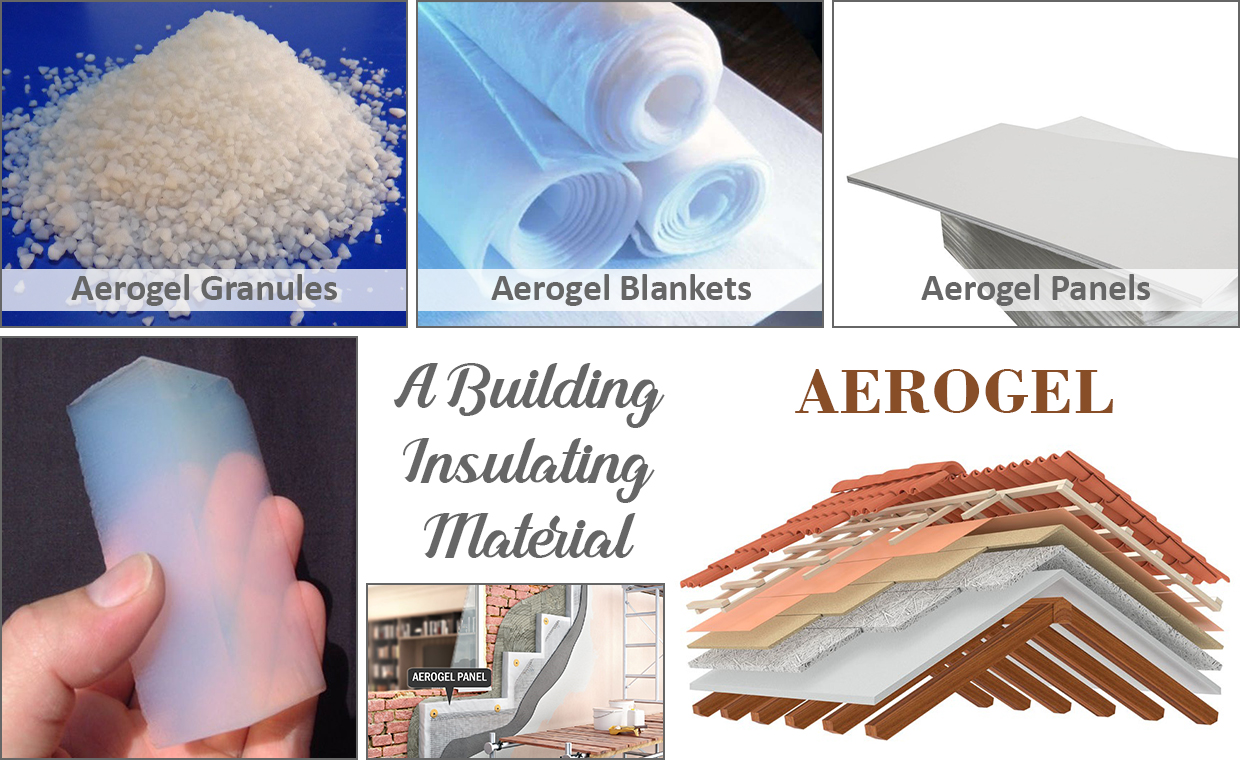
Aerogel blanket is where the strongest structural advantage lies.
With thermal conductivity typically between 0.013–0.020 W/m·K, aerogel blanket can achieve the same insulation effect as traditional materials at one-third to one-fifth of the thickness.
This directly addresses one of Europe’s biggest renovation challenges: Limited space.
Applications include:
Interior wall insulation where space reduction must be minimized
Historic façade renovation without altering exterior appearance
Roof and attic upgrades with load limitations
High-efficiency public buildings targeting better energy ratings
In addition to thermal insulation, aerogel blanket also provides:
Sound absorption performance
Fire resistance (depending on system classification)
Lightweight structure reducing structural load
Under EPBD, deep renovation projects must significantly improve energy ratings.
Aerogel blanket allows higher thermal resistance without major structural modification.
This makes it particularly suitable for:
Urban residential renovation
Office buildings upgrading to higher EPC levels
Schools and public infrastructure projects
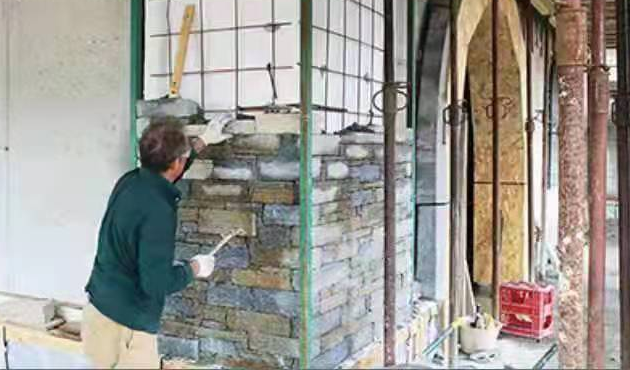
Aerogel Boards and Composite Systems: Structural Integration
Aerogel boards and composite panels integrate aerogel into rigid insulation systems.
They are used in:
External wall insulation systems (ETICS)
Curtain wall integration
Prefabricated modular construction
High-end residential and commercial buildings
In projects targeting near-zero energy standards, insulation thickness often conflicts with façade design.
Aerogel-based boards allow designers to:
Reduce wall thickness
Maintain architectural proportions
Improve overall building envelope efficiency
As European regulations gradually incorporate lifecycle carbon accounting, high-performance materials that reduce structural volume can become advantageous.
Insulation vs. Heat Blocking: A Necessary Distinction
In many markets, “thermal insulation” and “heat blocking” are used interchangeably.
Technically, they are different.
Insulation depends on thermal resistance (R-value = thickness / conductivity)
Heat blocking and radiant barrier effects reduce heat gain without necessarily increasing R-value significantly
Aerogel blanket primarily provides high R-value insulation.
Aerogel coating provides surface-level thermal barrier and radiant heat control.
In European building renovation, combining both strategies can improve overall envelope efficiency.
Where Aerogel Makes the Most Sense in Europe
Aerogel is not designed to replace all mineral wool or EPS applications.
It makes the most sense where:
Thickness is limited
High performance per millimeter is required
Renovation cannot alter building structure
Deep energy upgrades are mandatory
Thermal bridges must be minimized
Moisture and condensation risks exist
As EPBD implementation progresses across EU member states, deep renovation projects are expected to increase significantly.
In these projects, ultra-thin high-performance insulation materials become strategic components — not luxury add-ons.
Strategic Outlook: From Niche Material to Renovation Enabler
Historically, aerogel was viewed as a premium or niche material.
However, regulatory pressure is changing the calculation.
When:
Energy standards rise,
Space becomes the constraint,
Deep renovation becomes mandatory,
Performance per thickness becomes more valuable than material price per cubic meter.
Under this shift, aerogel insulation is moving from a specialized solution to a structural enabler in European building renovation.
Final Thoughts
The revised EPBD is not simply an environmental regulation.
It is reshaping the insulation material landscape in Europe.
As renovation demand accelerates, materials that deliver:
Ultra-thin thermal performance
Moisture control
Long-term durability
Multi-functional integration
will gain strategic importance.
Aerogel insulation, whether in blanket, coating, or composite form — is uniquely positioned to support high-efficiency building envelopes in the next phase of European construction and renovation.
Global Leader in Aerogel Materials & Advanced Composite Solutions
Back to Top
Copyright © 2025 Shenzhen Aerogel Technology Co., Ltd&Zhongning Technology(Hubei) Co.,Ltd
Power By Bontop

 English
 Korean