


Aerogel+ Products All You Need for Thermal Insulation

Aerogel Insulation Material | China | Top Leading| China | Top Leading
Share
High-temperature insulation rarely fails on straight pipe runs.
It usually starts at the points where temperature, geometry, and mechanical stress come together—valves, flanges, expansion joints, and irregular equipment surfaces. These areas see the highest thermal cycling and the most maintenance activity.
At 300°C, 400°C, or higher, small imperfections stop being minor.
A few millimeters of gap, a hairline crack, or a poorly sealed edge can quickly turn into a measurable hot spot. Surface temperatures rise, and heat loss becomes visible during operation.
Over time, these localized issues tend to accumulate. Moisture enters through cracks, insulation performance drops unevenly, and in more severe cases, it contributes to corrosion under insulation,something widely discussed in references such as NACE International.
What makes high-temperature insulation difficult is not just temperature itself.
It’s the combination of repeated expansion and contraction, complex geometry, and the need for ongoing access. Traditional systems tend to address only part of this.
Rigid coatings become brittle over time.
Thick insulation layers introduce stress and weight.
Removable covers lose sealing performance after repeated handling.
These problems often don' t appear immediately. They develop gradually, and usually become visible only after the system has been running for some time—when fixing them is more complicated and costly.
Aerogel-based coatings approach the problem differently.
The material is built on a nano-porous silica structure that limits heat transfer more effectively, especially at elevated temperatures.
More importantly, it changes how insulation is applied.
Instead of wrapping insulation around the equipment, the coating is applied directly onto the surface. It follows the shape, fills gaps, and forms a continuous layer.
On valves and flanges, this removes many of the weak points where heat loss typically begins.
Because there are no seams, there are fewer places for gaps to develop over time. This is particularly relevant in high-temperature systems, where even small discontinuities can significantly affect performance.
Thermal cycling becomes more aggressive at higher temperatures. Equipment expands and contracts daily. If the insulation layer cannot tolerate that movement, cracking is almost unavoidable.
Aerogel coatings are formulated to accommodate a certain degree of movement, helping maintain integrity over repeated cycles.
Another noticeable difference is thickness.
Compared to traditional paste systems, aerogel coatings typically require less build-up to achieve similar insulation performance, depending on operating conditions.
In congested areas, this reduction makes installation easier and improves accessibility for future maintenance.
Weight reduction follows naturally from reduced thickness.
In offshore structures or elevated pipe racks, this becomes more relevant, as additional load needs to be carefully managed.
From a construction perspective, application remains straightforward. Standard tools can be used, and build-up can be controlled on site.
In some cases, work can be carried out without waiting for full shutdown, depending on surface temperature and conditions.
This does not mean aerogel coatings replace all insulation systems.
Straight pipe runs are usually handled effectively by conventional materials. Where aerogel coatings tend to make more difference is in high-temperature areas that are complex, frequently accessed, or historically prone to insulation issues.
Valves and flanges are typical examples. These components are often left uninsulated or poorly insulated due to their geometry, leading to significant energy loss.
Cost discussions usually start with material price.
Aerogel coatings are typically higher in upfront cost. However, in high-temperature systems, insulation performance is closely linked to maintenance frequency, energy loss, and operational stability.
In areas where insulation requires repeated intervention, the comparison often shifts from initial cost to long-term performance.
For high-temperature equipment, insulation is not just about meeting specifications at installation.
It is about how the system performs after months or years of thermal cycling, maintenance, and real operating conditions.
That is where differences between materials become visible.
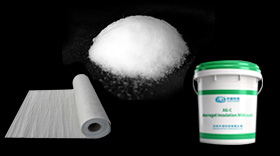
Find our Advanced Aerogel Coating Solutions for High Temperature Irregular equipment: AG-C Flexible Thermal Insulation Coating for 200°C-600°C High Temperature
Global Leader in Aerogel Materials & Advanced Composite Solutions
Back to Top
Copyright © 2025 Shenzhen Aerogel Technology Co., Ltd&Zhongning Technology(Hubei) Co.,Ltd
Power By Bontop
 English
 Korean