

Aerogel+ Products All You Need for Thermal Insulation

Aerogel Insulation Material | China | Top Leading| China | Top Leading
Share
In the fields of building materials, industrial insulation, and new energy, two types of “thermal insulation coatings” are often mentioned together: aerogel coatings and hollow glass microsphere coatings.
They are both marketed as high-efficiency insulation materials, and visually they even look similar — usually grey-white pastes with lightweight fillers. Because of this, many buyers and engineers initially assume they deliver comparable performance.
In practice, however, their insulation mechanism, workability, and long-term stability are fundamentally different. Looking beyond appearance and focusing on structure and test data makes the distinction much clearer.
One of the first differences becomes obvious during application.
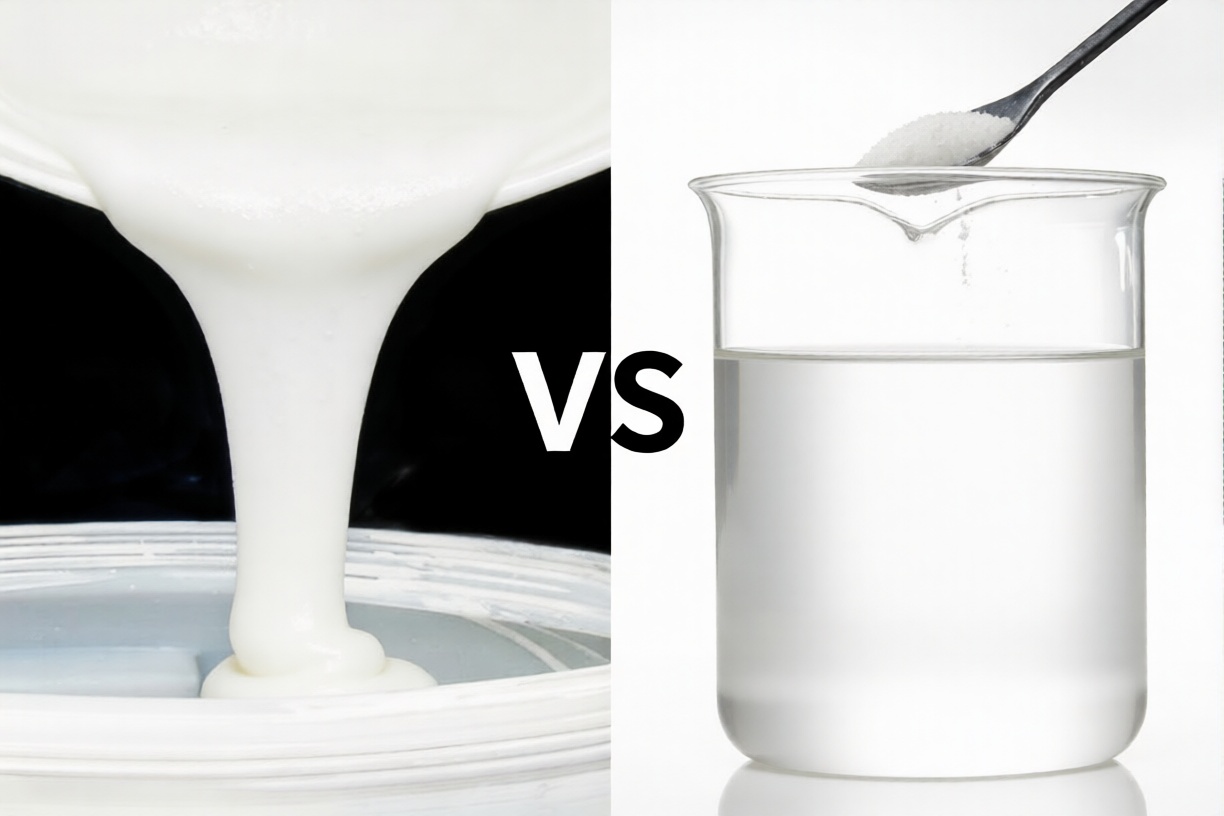
Hollow glass microsphere coatings often appear acceptable when freshly opened, but after storage they tend to thicken, dry out, and even form hardened lumps. Before application, additional water and intensive mixing are usually required just to restore basic workability. Even after re-mixing, the applied coating film often feels rigid and brittle, with limited flexibility.
Aerogel coatings behave differently. They generally maintain stable flowability over time. Even if slight stratification occurs during storage, simple stirring is enough to restore a uniform paste. The coating spreads more smoothly and is less prone to hard agglomeration or severe thickening.
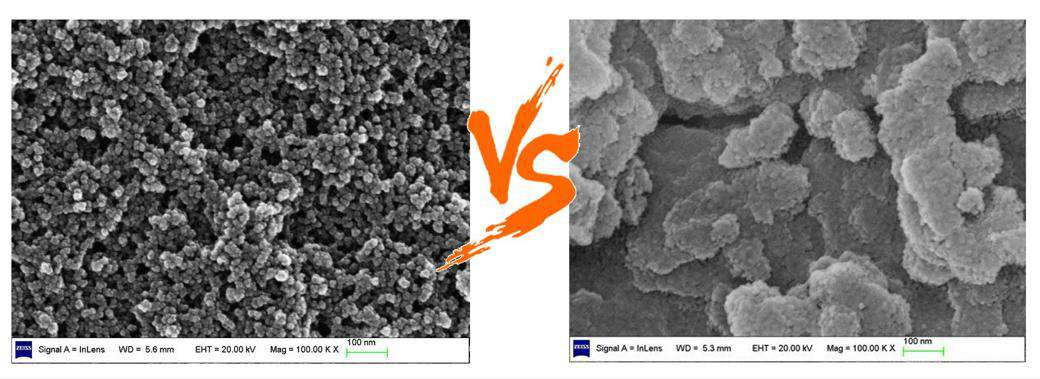
This difference mainly comes from the internal structure of the fillers. Hollow glass microspheres are discrete particles that can settle and compact over time. Aerogel, by contrast, forms a three-dimensional nano-porous network that helps stabilize the slurry system and reduce structural collapse during storage and application.
Workability affects construction, but thermal conductivity determines real insulation performance. Under comparable laboratory conditions, the performance gap between aerogel coatings and hollow glass microsphere coatings becomes significant.
Typical comparisons show:
Lower dry density for aerogel coatings, often nearly half that of microsphere-based coatings
Thermal conductivity around 0.025 W/(m·K) for aerogel coatings versus about 0.036 W/(m·K) for hollow glass microsphere coatings
Noticeably lower cold-side temperatures during heat exposure tests
In controlled heating tests, aerogel coatings usually show a slower temperature rise and lower equilibrium surface temperature, indicating more effective heat blocking. Hollow glass microsphere coatings, on the other hand, tend to allow faster heat transfer once the coating layer reaches steady state.
Another practical issue is dilution. When hollow glass microsphere coatings are adjusted to improve workability (by adding more liquid), their thermal conductivity typically increases, and insulation performance drops. Aerogel coatings are less sensitive in this regard, maintaining relatively low thermal conductivity while still offering acceptable application properties.
The root cause of the performance gap lies in material structure.
Hollow glass microspheres rely on a particle-based insulation mechanism. Air trapped inside the spheres reduces heat transfer, but the overall coating still contains inter-particle gaps that can form thermal bridges. Over time, particle settling and packing can further reduce insulation efficiency.
Aerogel coatings use nano-porous silica aerogel as the core functional filler. The interconnected nanoporous structure significantly suppresses solid conduction, gas conduction, and thermal radiation simultaneously. This multi-scale insulation mechanism allows aerogel coatings to achieve high thermal resistance even at thinner thicknesses.
For applications where space is limited — such as pipelines, battery packs, or equipment surfaces — this structural advantage becomes particularly important.
Beyond thermal conductivity, environmental resistance also affects long-term insulation performance.
Aerogel coatings typically exhibit hydrophobic behavior when the aerogel content reaches an appropriate level. Water droplets tend to bead on the surface rather than being absorbed, which helps maintain insulation performance in humid environments.
Hollow glass microsphere coatings are generally more hydrophilic. Moisture absorption can gradually reduce insulation efficiency and may lead to issues such as coating degradation, mold growth, or adhesion failure in long-term outdoor or high-humidity conditions.
From a durability perspective, coatings with lower shrinkage and better structural stability are also less prone to cracking. Aerogel-based systems usually show lower drying shrinkage, forming more stable and crack-resistant insulation layers over time.
In thermal management applications, solar reflectivity is another relevant factor.
Aerogel coatings can achieve high solar reflectance and near-infrared reflectance when properly formulated, helping reflect a significant portion of incoming radiant heat. This is particularly useful for building roofs, exterior walls, and outdoor equipment exposed to strong sunlight.
While hollow glass microsphere coatings can provide some reflective performance, their overall heat reflection capability is typically lower, making them less effective in scenarios dominated by solar radiation heat gain.
In practical engineering selection, the choice depends on performance requirements rather than appearance.
For projects that require high-performance thermal insulation, long-term stability, and reliable construction quality, such as industrial pipelines, energy storage systems, high-end building insulation, and advanced thermal protection — aerogel coatings are generally the more suitable solution.
Hollow glass microsphere coatings may still be considered in cost-sensitive applications where only basic insulation is needed and performance requirements are relatively moderate.
Ultimately, the competition between insulation coatings is not about which material looks lighter or more similar in form, but about material structure and thermal physics. What appears to be two similar grey-white coatings on the surface actually represents two different technological paths: traditional particle-filled insulation versus nano-porous thermal insulation technology. Understanding this distinction helps engineers, contractors, and material buyers make more informed decisions when selecting insulation coating systems for real-world applications.
Explore High Performace Aerogel Thermal Insulation Coating by Clicking:
Shenzhen Aerogel Product: Aerogel Low Thermal Conductivity Thermal Insulation Coating
Global Leader in Aerogel Materials & Advanced Composite Solutions
Back to Top
Copyright © 2025 Shenzhen Aerogel Technology Co., Ltd&Zhongning Technology(Hubei) Co.,Ltd
Power By Bontop
 English
 Korean