


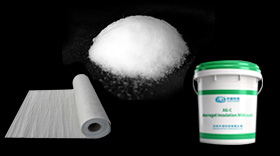
Aerogel+ Products All You Need for Thermal Insulation

Aerogel Insulation Material | China | Top Leading| China | Top Leading
Share
In industrial insulation and building applications, aerogel coating is often judged in a way that almost guarantees the wrong conclusion.
A 2–3 mm aerogel coating is frequently compared directly with traditional insulation systems that are 50–100 mm thick.
From that comparison alone, it is often dismissed as “not cost-effective” or “insufficient in performance.”
The issue is not the material, it is the evaluation method.
At the root of this misunderstanding is a confusion between two fundamentally different metrics: thermal conductivity and thermal resistance. They are related, but they are not interchangeable, and using them incorrectly leads to flawed engineering decisions.
Thermal conductivity is a material property.
It describes how efficiently heat passes through a material under controlled conditions, typically expressed in W/(m·K) and measured under standards such as ASTM C518 or ISO 8301. It does not change with thickness, and it does not directly represent system performance.
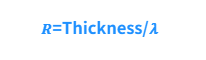
Thermal resistance, on the other hand, is a system-level result. It depends on both material conductivity and thickness, and is defined by a simple relationship:
This distinction is not academic, it determines how materials should be evaluated in real applications.
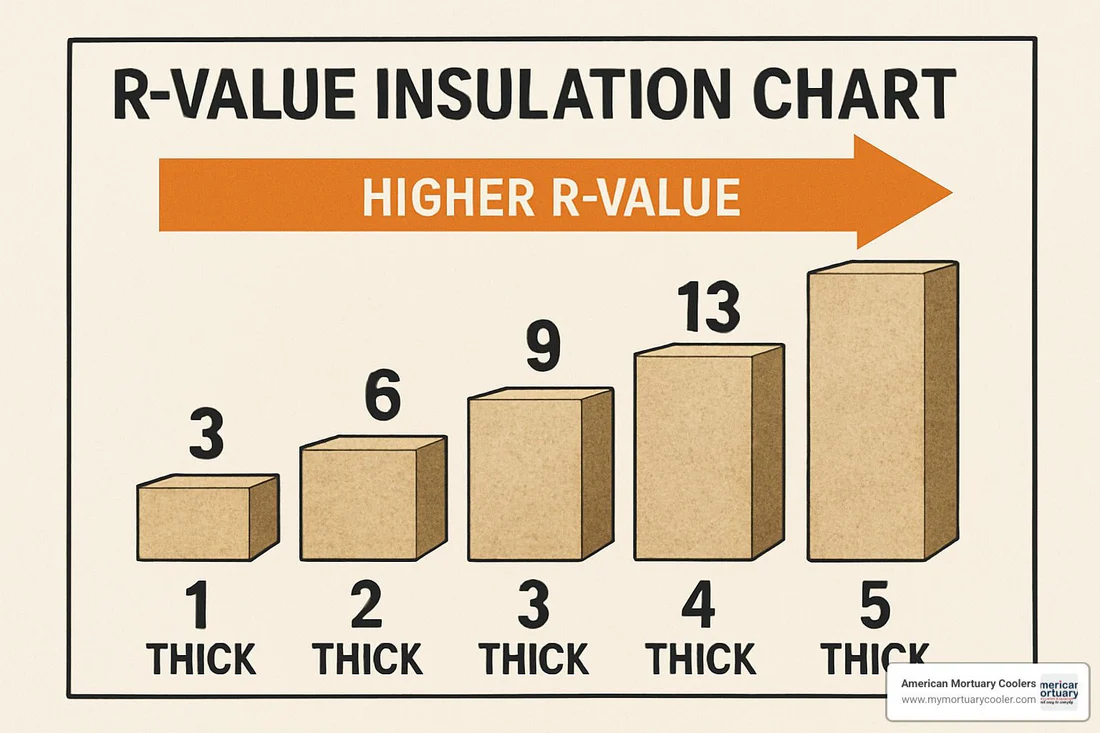
When thickness can be increased freely, thermal resistance becomes the dominant factor. When thickness is constrained, thermal conductivity becomes far more relevant.
Most industry comparisons implicitly assume that all insulation materials are designed to serve the same purpose, maximizing total R-value.
Under that assumption, a 2 mm aerogel coating will always appear inferior to a 100 mm insulation system. And in terms of total thermal resistance, it is.
But this comparison ignores the design intent.
Consider standardized data:
Material Thermal Conductivity (λ) Thickness Thermal Resistance (R)
Mineral Wool 0.040 W/(m·K) 100 mm 2.5 m²·K/W
Aerogel Coating 0.040 W/(m·K) 2 mm 0.05 m²·K/W
Aerogel Coating (Premium) 0.040 W/(m·K) 3 mm 0.075 m²·K/W
In other words, aerogel coating is not underperforming, it is simply operating within a completely different physical constraint.
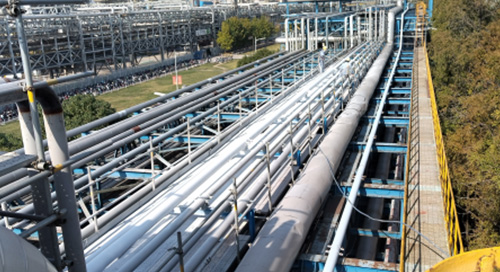
Aerogel coating is not intended to replace conventional insulation systems.
Its role becomes clearer when viewed within specific operating conditions, particularly in low- to mid-temperature pipelines (typically below 120°C), where corrosion under insulation (CUI) is often a more critical concern than pure heat loss.
In these environments, the challenge is not simply maintaining thermal resistance, but managing how the insulation system interacts with moisture over time.
Moisture ingress is difficult to fully eliminate in real-world conditions.
When surface temperatures approach or fall below the dew point, condensation can form. In traditional insulation systems, especially those involving multi-layer wraps, this moisture can become trapped within the structure, creating a persistent wet interface against the metal surface.
Over time, this significantly increases the risk of corrosion.Industry experience shows that a large proportion of insulation systems will experience some degree of moisture intrusion within just a few years of service, even when properly installed.
Aerogel coating addresses this issue from a different angle.
Instead of forming an enclosed insulation system, it is applied directly onto the substrate, eliminating the void space where moisture would otherwise accumulate.
At the same time, its thermal conductivity (~0.040 W/(m·K)) is sufficient to moderate surface temperature with 2-3mm, helping reduce the likelihood of condensation forming in the first place. Combined with its inherent hydrophobicity (typically above 99%), the coating does not retain water and maintains stable performance even in humid or cyclic environments.
In this sense, aerogel coating functions less as a bulk insulator, and more as a surface-level thermal and anti-corrosion solution, particularly suited to CUI-prone temperature ranges.
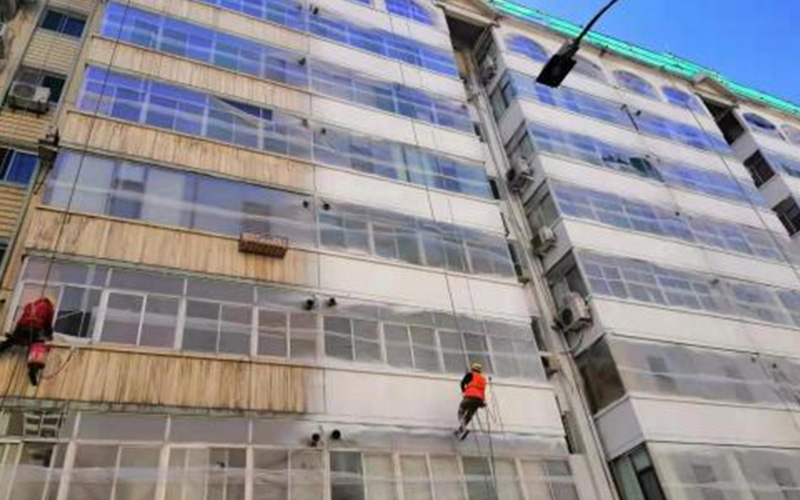
Beyond industrial systems, the relevance of aerogel coatings in building applications is better understood from a thermal barrier perspective rather than conventional insulation.
In many building scenarios, the primary objective is not to retain heat within a system, but to limit heat gain through the envelope or exposed surfaces, especially under solar radiation or high ambient temperatures.
Traditional insulation materials are typically designed to provide thermal resistance through thickness, making them effective for reducing heat loss, but less practical when thickness is constrained or when surface-level heat control is required.
Aerogel coatings function differently.
Applied as a thin layer directly onto the surface, they act as a thermal barrier that reduces heat transfer at the interface. This helps lower surface temperature and limits heat penetration into the structure, without relying on bulk thickness.
In façade elements, roofs, or localized thermal bridge areas, this surface-based approach allows for targeted thermal management where conventional insulation cannot be easily applied or would alter the building geometry.
In this context, aerogel coatings are not a substitute for traditional insulation systems, but a complementary solution focused on heat gain reduction and surface thermal control.
Many real-world systems do not allow for thick insulation at all.
Retrofits, complex piping networks, valves, and irregular geometries make traditional insulation difficult to install and maintain. Even when applied, gaps and inconsistencies are common, reducing effectiveness and introducing localized risks.
Aerogel coating operates within these constraints. Its thin application (typically 1–5 mm) allows it to conform to complex surfaces without adding bulk, while still providing measurable thermal control and condensation mitigation.
Aerogel coating is often criticized for its higher upfront cost. However, material cost alone rarely reflects total project economics.
In industrial systems, CUI-related maintenance, inspection, and repair can account for a significant portion of lifecycle costs. Avoiding repeated maintenance or unplanned downtime can quickly offset initial investment.
In building retrofits, avoiding demolition and preserving usable space often provides economic value that traditional insulation cannot offer.
In cold-chain systems, preventing condensation and maintaining performance without increasing thickness directly translates into operational efficiency and usable volume.
Once the evaluation shifts from material cost per unit area to system-level cost over time, the economic case becomes more balanced.
Thermal conductivity and thermal resistance are both valid metrics, but they answer different questions.
Thermal resistance defines how well a system insulates when thickness is available.
Thermal conductivity defines how efficient a material is when thickness is limited.
Aerogel coating is not a replacement for traditional insulation, and evaluating it as such leads to misleading conclusions.
Its value lies in solving problems that conventional insulation cannot, for instance, moisture-related performance loss, CUI risk, space constraints, and complex geometries.
In those scenarios, it is not an alternative, it is often the only practical solution.
If you are evaluating insulation solutions under space constraints, feel free to contact us for technical support or sample testing.
Clicking here to check our Aerogel Coating:
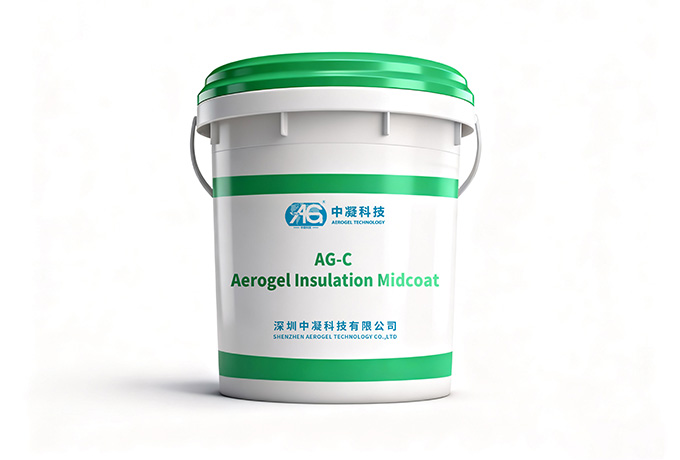
AG-C Aerogel Coating for Building Heat Insulation
AG-CGT Tank Insulation Aerogel Coating
Aerogel Technical Insights | Feb 28,2026
Aerogel Technical Insights | Feb 28,2026
Aerogel Technical Insights | Feb 28,2026
Global Leader in Aerogel Materials & Advanced Composite Solutions
Back to Top
Copyright © 2025 Shenzhen Aerogel Technology Co., Ltd&Zhongning Technology(Hubei) Co.,Ltd
Power By Bontop
 English
 Korean